





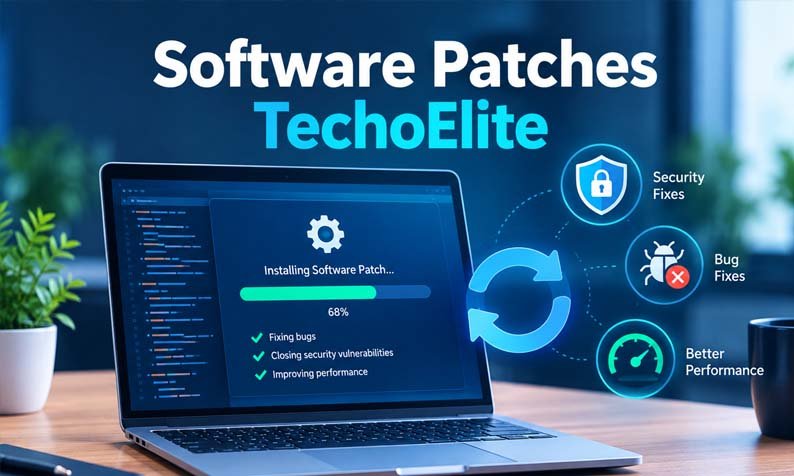
Software patches techoelite refers to content discussing software patches, their purpose, and how they can help address software problems. In general, a software patch is a change applied to existing software to fix security or functionality issues or add capabilities.
What Are Software Patches?
A software patch is a piece of code or modification designed to correct an issue in existing software. These fixes can address bugs, security vulnerabilities, compatibility problems, or other functionality concerns. Some patches may also introduce improvements or additional features.
Patch management involves identifying, acquiring, installing, and verifying patches for software and systems. This makes patching more than simply installing an update; it is part of an organized software-maintenance process.
For people researching software patches techoelite, it is useful to distinguish between general patching principles and information published by a particular website. The term itself does not describe a separate, universally recognized patching technology.
How Do Software Patches Work?
When developers identify a problem, they can create a patch that changes part of the affected software. Once installed, the modification can correct the underlying issue without requiring users to replace the entire application.
Security patches are especially important because attackers may exploit known vulnerabilities in outdated software. Applying appropriate updates can reduce exposure to known software weaknesses.
A typical patch-management process includes identifying available updates, deciding which ones require attention, testing them where appropriate, deploying them, and checking that installation was successful. Organizations may also prioritize patches according to the severity of a vulnerability and the importance of affected systems.
Why Are Software Patches Important?
Patches can provide several practical benefits. They can correct software defects, improve functionality, and address security weaknesses. Keeping supported software updated can therefore be an important part of basic cybersecurity maintenance.
However, patching also requires care. Organizations may need to test updates before deployment because a patch can affect system availability or interact unexpectedly with other applications. Larger environments may use phased deployment and verification instead of updating every system simultaneously.
Users should also obtain updates from legitimate software vendors or trusted sources. An unofficial file described as a “patch” should not automatically be considered safe simply because it uses familiar terminology.
Conclusion
Software patches techoelite is best understood in the context of software updates and patch-management information. Software patches themselves are standard tools for correcting security and functionality problems, while reliable patching requires appropriate testing, deployment, and verification.
Read about 5StarsStocks .
FAQs
What is a software patch?
A software patch is a modification that fixes security or functionality problems or adds capabilities to existing software.
Why are security patches important?
They can correct vulnerabilities that attackers might otherwise exploit.
Should every patch be installed immediately?
Not necessarily in every environment. Organizations may need to assess, test, prioritize, and then deploy patches appropriately.
Is “software patches techoelite” a software product?
The phrase does not by itself establish a separate software product. It is better treated as a search term related to software patching and TechoElite content.