





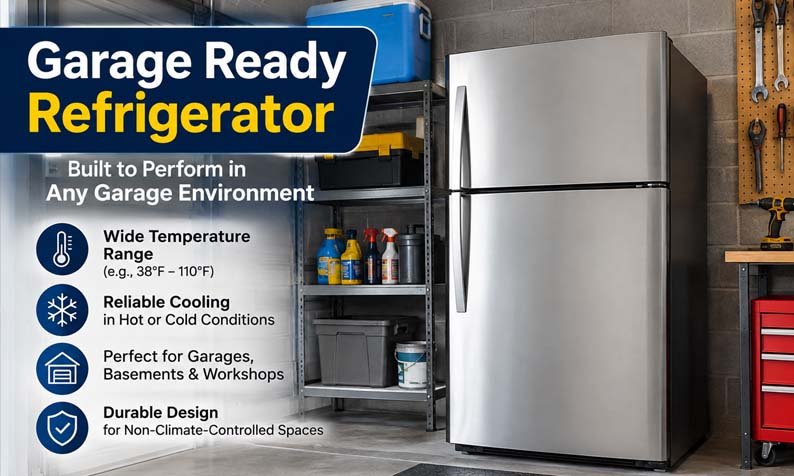
Yes, a garage ready refrigerator can be worth it if you need extra food storage in a space without consistent indoor temperatures. These refrigerators are designed to handle wider temperature fluctuations than many standard models, making them suitable for garages, workshops, and similar areas.
What Is a Garage Ready Refrigerator?
A garage ready refrigerator is built to operate in a wider range of surrounding temperatures. A typical indoor refrigerator is designed for a relatively stable environment, while a garage can become very hot in summer or quite cold during winter.
Depending on the model, garage-ready appliances may include features that help maintain proper cooling during these changes. Some manufacturers specify operating ranges around 38°F to 110°F, although exact limits vary by product.
It is important to check the manufacturer’s specifications before purchasing. The term “garage ready” does not mean every refrigerator can safely operate in every climate.
Key Features and Benefits
The biggest advantage is reliable operation in changing temperatures. A suitable model can provide convenient extra storage without requiring you to climate-control the entire garage.
Common features include adjustable shelves, humidity-controlled drawers, large door bins, automatic defrost, and freezer compartments. Some models also offer ice makers or ice-maker compatibility.
A garage refrigerator can be useful for storing extra groceries, frozen foods, drinks, or items that do not fit in your primary kitchen refrigerator. It can also help separate frequently used beverages and bulk purchases from everyday kitchen storage.
Energy efficiency is another consideration. Because garage temperatures can become extreme, the appliance may work harder than it would in a comfortable indoor environment. Choosing an appropriately rated model and maintaining sufficient ventilation can help it operate more effectively.
How to Choose the Right Model
Start by checking the approved ambient temperature range. This is one of the most important specifications for a garage appliance. If your garage regularly becomes extremely hot or cold, choose a model specifically designed for those conditions.
Next, measure the available space carefully. Consider the refrigerator’s width, height, depth, door swing, ventilation clearance, and the path required to bring it into the garage.
Capacity is equally important. A compact refrigerator may work well for drinks and occasional storage, while a larger top-freezer model may be better for bulk groceries.
Also compare energy consumption, warranty coverage, freezer configuration, shelving, and ice-maker options. Always follow the manufacturer’s installation instructions, especially regarding clearance and ventilation.
Conclusion
A garage ready refrigerator is a practical choice when you need dependable additional storage outside the kitchen. Its wider operating range makes it better suited to temperature-changing environments, but the correct model depends on your garage conditions, available space, and storage needs.
Read about Rose Bundy
FAQs
Is a garage ready refrigerator different from a regular refrigerator?
Yes. Garage-ready models are designed and rated for a broader range of surrounding temperatures.
Can any refrigerator be placed in a garage?
No. Check the manufacturer’s approved operating-temperature range before installing one in an unconditioned garage.
Does a garage refrigerator use more electricity?
It can, particularly when exposed to very high or low temperatures. Actual consumption depends on the model and environment.
What should I check before buying one?
Check the temperature range, dimensions, ventilation requirements, capacity, energy use, warranty, and available features.