





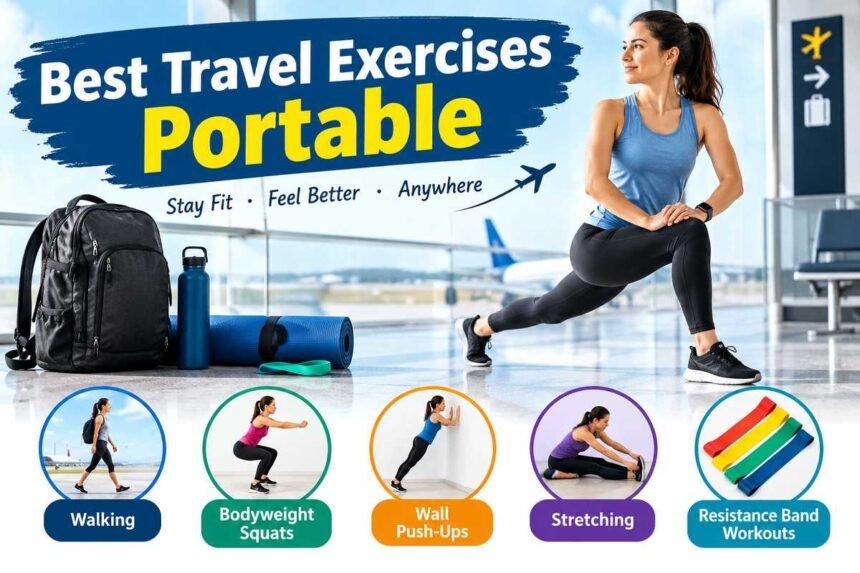
The best travel exercises portable options include walking, bodyweight squats, wall push-ups, gentle stretching, and resistance-band workouts. These activities help travelers stay active in hotel rooms, airports, parks, and other suitable spaces without needing a gym. A practical travel fitness routine should fit your schedule, available space, experience, and comfort level while allowing enough time for rest and recovery.
What Makes Portable Travel Exercises Worth Trying?
Travel can interrupt regular exercise habits. Long flights, road journeys, busy sightseeing schedules, and unfamiliar hotel facilities may make it difficult to follow your usual routine. Portable workouts offer a practical alternative because they require little preparation and can fit into short breaks.
One major advantage is flexibility. You can walk around a safe area, perform bodyweight exercises in your room, or use a lightweight resistance band for strength training. Many of these activities require no expensive equipment or gym membership.
Portable exercise also makes it easier to adapt your routine to your surroundings. Travelers with limited room space can choose standing movements, while those with access to a park or pedestrian-friendly area can enjoy outdoor walking.
Consistency matters more than building a complicated workout. A manageable routine that fits your trip is generally easier to maintain than a demanding plan requiring specialized equipment. Even when your travel schedule changes, simple activities can help you maintain regular movement.
Fast Info: Portable Travel Exercises
| Feature | Details |
| Main purpose | Maintain physical activity while traveling |
| Best no-equipment options | Walking, squats, wall push-ups, and gentle mobility exercises |
| Useful portable equipment | Resistance bands and a travel exercise mat |
| Suitable locations | Hotel rooms, parks, and other safe spaces |
| Recommended approach | Choose activities that match your ability and available time |
| Key consideration | Allow enough space for safe movement and recovery |
Which Exercises and Equipment Work Best on the Road?
The best travel workouts combine simple strength exercises, cardiovascular activity, and gentle mobility movements. Choose options that suit your destination rather than packing equipment you may never use.
| Exercise or equipment | Main purpose | Best setting |
| Walking | Cardiovascular activity | Parks, airports, and city streets |
| Bodyweight squats | Lower-body strength | Suitable indoor or outdoor spaces |
| Wall push-ups | Upper-body strength | Hotel rooms with a stable wall |
| Resistance bands | Strength training | Hotels and holiday rentals |
| Gentle stretching | Mobility and flexibility | After sitting or sightseeing |
| Jump rope | Cardiovascular activity | Suitable outdoor spaces |
Walking and bodyweight exercises
Walking is one of the simplest ways to stay active while traveling. You can explore a destination on foot, walk through a suitable airport area, or take a short stroll during a break. Wear comfortable footwear and choose routes that are safe for pedestrians.
Bodyweight squats and wall push-ups are useful alternatives when a gym is unavailable. Squats work muscles around the hips and thighs, while wall push-ups provide an accessible upper-body exercise. Begin with a comfortable range of motion and avoid movements that cause pain.
Gentle standing marches are another option for limited spaces. They allow you to move without requiring a mat or other equipment. Choose a stable surface and keep nearby furniture or luggage out of your way.
Compact equipment for travel fitness
Resistance bands are particularly practical because they are lightweight and take up little luggage space. They can be used for rows, presses, and other strength exercises. Mayo Clinic provides sports medicine and exercise guidance, including information on resistance training.
A travel exercise mat may be useful if you regularly perform floor exercises or yoga. However, it takes up more space than a resistance band and is not essential for a basic travel workout.
A jump rope is another compact option for travelers who enjoy vigorous exercise. It requires enough clearance, a suitable surface, and consideration for people nearby. This makes it less practical in small hotel rooms or crowded indoor spaces.
You can also exercise without purchasing anything. Walking, controlled squats, wall push-ups, and standing mobility movements provide a useful starting point for a portable fitness routine.
How Can You Build a Simple Travel Workout?
A portable workout does not need to be complicated. Begin with a few minutes of comfortable movement, select exercises that suit your ability, and take breaks whenever necessary.
The following example is a flexible routine for someone who is comfortable performing these movements.
| Activity | Example amount |
| March gently in place | 2 minutes |
| Bodyweight squats | 8–10 repetitions |
| Wall push-ups | 8–10 repetitions |
| Resistance-band rows, if available | 8–10 repetitions |
| Gentle shoulder and ankle movements | 2 minutes |
These amounts are examples, not medical prescriptions. One round may be sufficient on a busy travel day. If the routine feels comfortable, you can repeat it while maintaining good technique and allowing time for recovery.
For longer trips, alternate strength exercises with walking and lighter movement. This approach makes it easier to adjust your activity when your itinerary changes. You can also split movement into shorter sessions throughout the day if a continuous workout does not fit your schedule.
Practical tips for staying consistent
- Pack minimally: A resistance band can support several strength exercises without taking up much luggage space.
- Use everyday opportunities: Walking to a nearby destination can add activity to your day.
- Keep sessions realistic: Short workouts are easier to fit around flights, meetings, and sightseeing.
- Respect your surroundings: Avoid jumping or noisy exercises where space is limited or other people may be disturbed.
- Allow recovery: Rest, adequate sleep, hydration, and comfortable pacing are important during travel.
- Adapt to your ability: Choose easier variations when needed, and stop if an exercise causes pain.
- Plan for changing schedules: Keep one or two simple exercises in mind for days when your itinerary is especially busy.
The CDC’s physical activity guidance recommends that adults aim for at least 150 minutes of moderate-intensity aerobic activity each week, along with muscle-strengthening activity on at least two days. Activity can be spread throughout the week, and some physical activity is better than none.
These are general adult guidelines, not a requirement to complete a particular workout every day. Children and teenagers have different activity recommendations, and exercise should be appropriate for the person’s age and abilities.
Staying active during flights and road journeys
Long periods of sitting deserve particular attention. The CDC’s travel health guidance advises travelers to move around periodically when possible and exercise their calf muscles while seated during long journeys. During air travel, walking opportunities about every two to three hours are suggested when feasible.
While seated, you can gently raise and lower your heels, lift your toes while keeping your heels down, and move your ankles through a comfortable range. These movements activate the leg muscles when standing is not possible.
When it is safe and permitted, stand or walk periodically during long journeys. Follow airline instructions and road safety requirements, and never attempt standing exercises while a vehicle is moving.
Seated movements and walking do not eliminate the risk of travel-related blood clots. Travelers with a history of blood clots or other relevant risk factors should seek individualized advice from a healthcare professional before traveling.
Conclusion
The best portable travel exercises are those you can perform safely and consistently wherever your trip takes you. Walking, bodyweight squats, wall push-ups, gentle mobility exercises, and resistance-band training offer practical ways to stay active without carrying bulky equipment.
Choose a routine that matches your available space, experience, and schedule. You do not need an elaborate gym setup to include movement in your day. A flexible approach can help you maintain an active lifestyle while traveling for work, holidays, or other commitments.
FAQs
1. What are the best portable exercises for traveling?
Walking, bodyweight squats, wall push-ups, gentle stretching, and resistance-band exercises are practical options for many travelers. The best choices depend on your available space, fitness level, and personal needs.
2. Can I exercise in a hotel room without equipment?
Yes. You can try bodyweight squats, wall push-ups, standing marches, and gentle mobility movements, provided you have enough safe space. Clear the area before starting and choose movements that feel comfortable.
3. What portable exercise equipment should I pack?
Resistance bands are a useful choice because they are lightweight, compact, and suitable for several strength exercises. A travel mat may also be useful if you regularly perform floor exercises, but neither item is essential for a basic routine.
4. How can I stay active during a long flight?
When permitted, stand or walk periodically. While seated, gently move your ankles, raise your heels and toes, and activate your calf muscles. If you have medical risk factors for blood clots, ask a healthcare professional about appropriate travel precautions.
read about Dan Jewett Net Worth